How to sort a small pantry into bin categories
Sort a small pantry by category, then match each group to a bin shape, from stacking bins and stair-step organizers to airtight containers.
A small pantry rarely runs out of space because it is full. It runs out because things of every shape share the same shelf: a bag of onions next to a box of tea, three half-used bags of rice behind a row of snack bars. Bins help, but only once you know what goes in each one. The method below works in that order: sort first, measure second, and only then choose a bin whose shape suits the things it will hold.
Step 1: Empty one shelf and sort it into categories
Start with a single shelf, not the whole pantry. Take everything off, wipe the shelf, and set the contents out on the counter in groups. Keep the groups practical, based on how you cook and shop rather than on how a store would label them. A typical small pantry ends up with something like:
- Produce that keeps outside the fridge: onions, potatoes, garlic.
- Everyday dry goods: pasta, rice pouches, jars of nut butter, baking supplies.
- Small flat things: seasoning packets, tea, drink mixes, gravy and sauce sachets.
- Snacks: bars, pouches, single-serve bags.
- Loose dry ingredients: cereal, flour, sugar, rice, beans, nuts.
- Bulky or odd-shaped extras: spare bottles, boxed items, backup supplies.
As you sort, throw out anything expired and set aside duplicates. The size of each group tells you how big its bin needs to be, and the shape of what is in it tells you which kind of bin to choose.
Step 2: Measure the shelf before you buy anything
Measure two numbers on each shelf: the inside depth, from the front edge to the back wall, and the clear height, from the shelf to the underside of the shelf above. If the pantry has a door, measure depth to the inside of the door, not the frame. Write both down; every bin below lists its own depth and height, and the comparison takes a minute.
Step 3: Produce and everyday dry goods go in open-front stacking bins
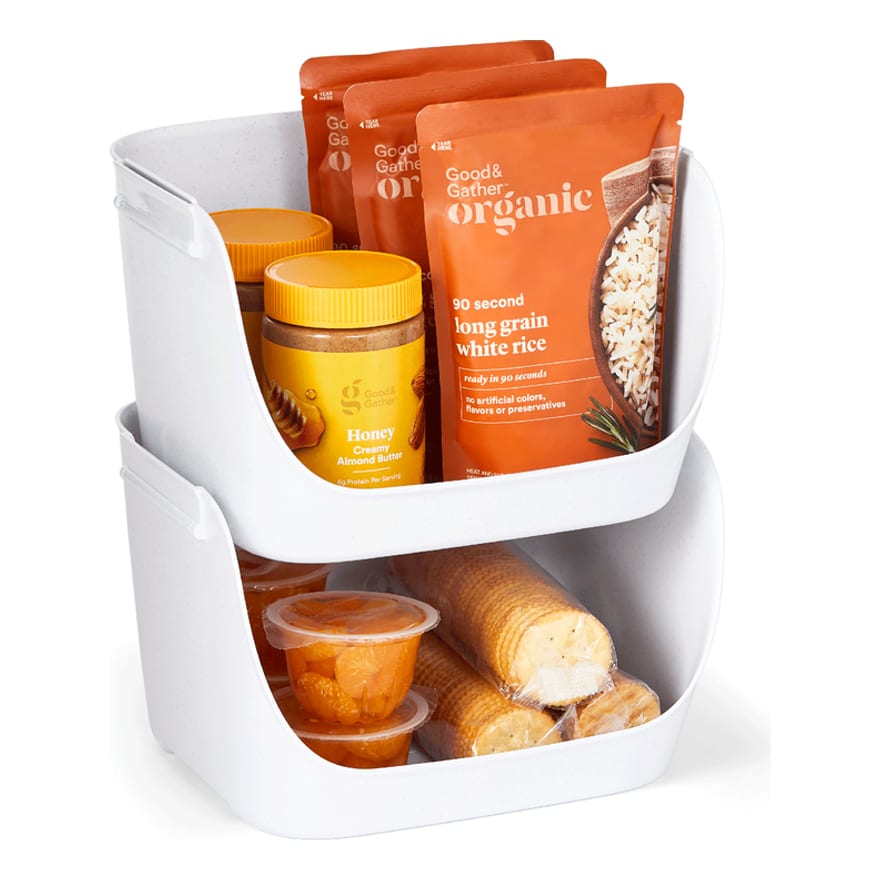
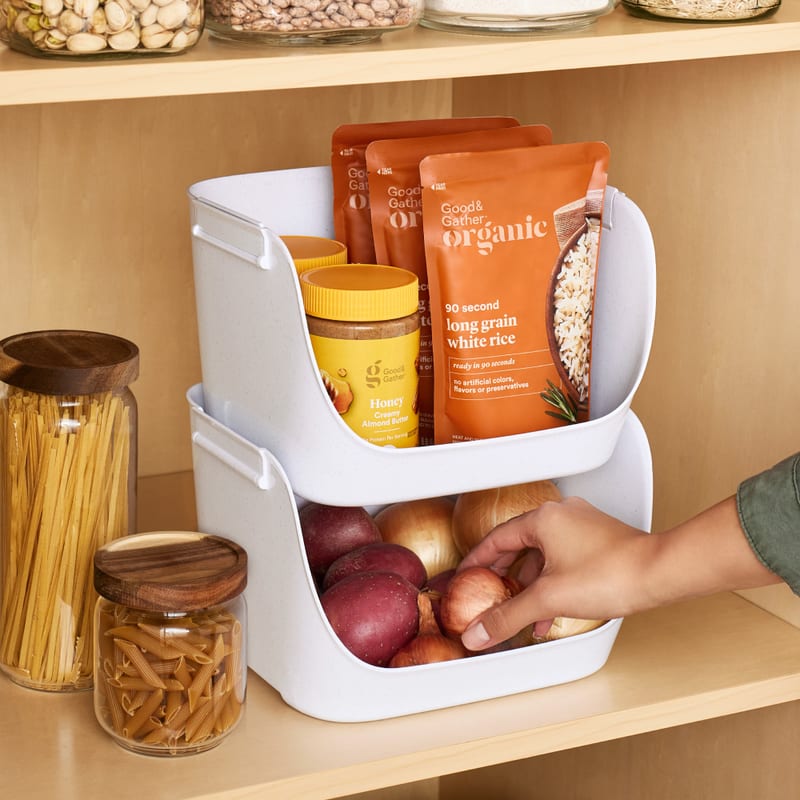
Things you grab several times a week, like onions, potatoes or a jar of nut butter, need a bin you can reach into without lifting it down. The ShelfBin™ Stacking Pantry Bins, 2-Pack from YouCopia are two bins with a wide opening at the front of each, so you can reach in from the front even when one sits on top of the other. You can stack them or set them side by side, and the maker lists produce, dry goods, baking supplies and snacks among the things they hold. They are made of solid, BPA-free recycled plastic in a speckled white color that wipes clean.
The fit: each bin measures 10.0 inches (25.4 cm) deep, 8.8 inches (22.4 cm) wide and 6.6 inches (16.8 cm) tall, and 12.3 inches (31.2 cm) tall when stacked. So a shelf at least 10 inches (25.4 cm) deep takes them, and stacking needs a clear height of a little over 12.3 inches (31.2 cm). On a shorter shelf, set them side by side instead: together they take up about 17.6 inches (44.7 cm) of shelf width.
Step 4: Packets and tea go in a small stair-step organizer
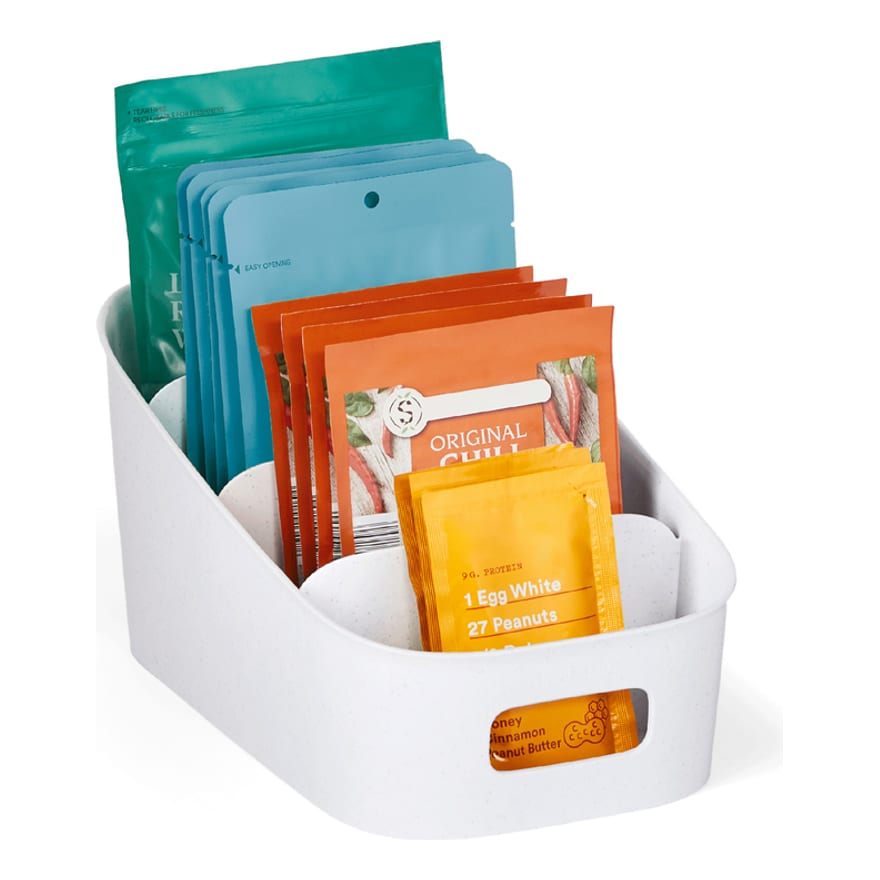
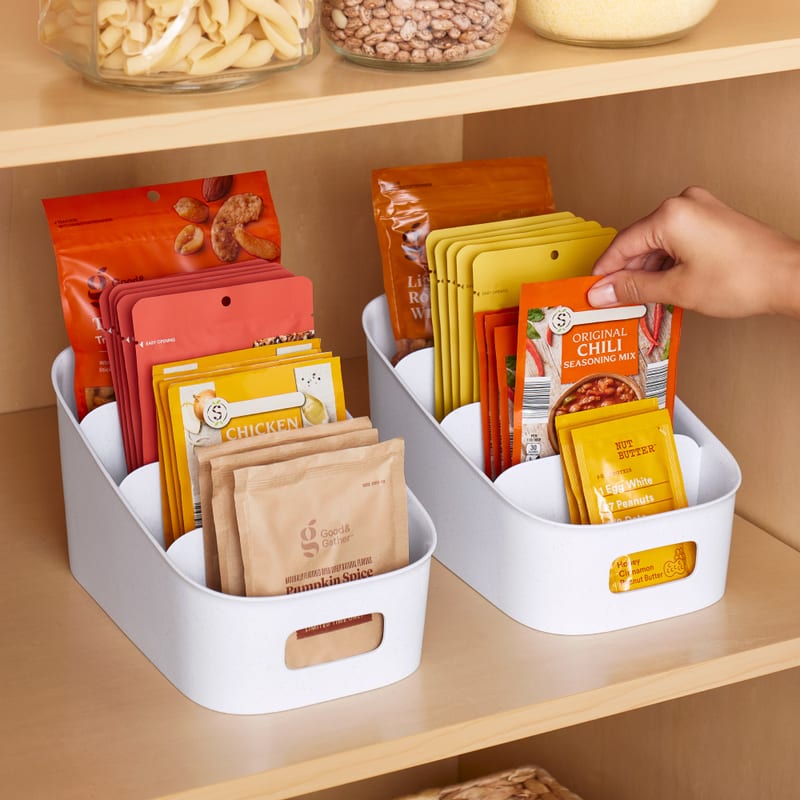
Seasoning packets, tea bags and sachets are the items most likely to slide to the back and disappear. They need narrow compartments that keep them upright, and a raised back row so you can see past the front. The ShelfBin™ Packet Organizer has four compartments in a stair-step design that lifts the back items into view. The maker names packets, snacks, tea and even medicine among the things it holds. A built-in handle lets you slide it out or carry it anywhere.
The fit: it measures 10.7 inches (27.2 cm) deep, 6.5 inches (16.5 cm) wide and 5.2 inches (13.2 cm) tall, and is made of BPA-free recycled plastic in speckled white. It needs a shelf about 11 inches (28 cm) deep, and its narrow width suits the gap beside a larger bin. It is 5.2 inches (13.2 cm) tall, which leaves the taller spaces for the containers in step 6.
Step 5: Snacks go in a wider organizer with adjustable dividers
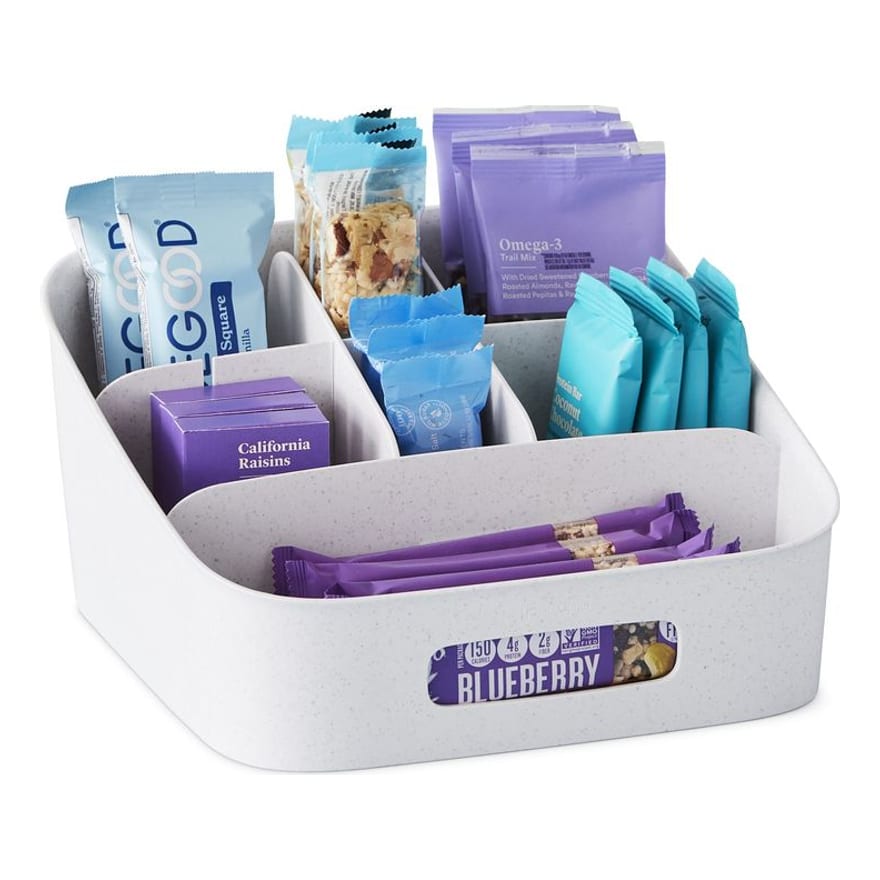
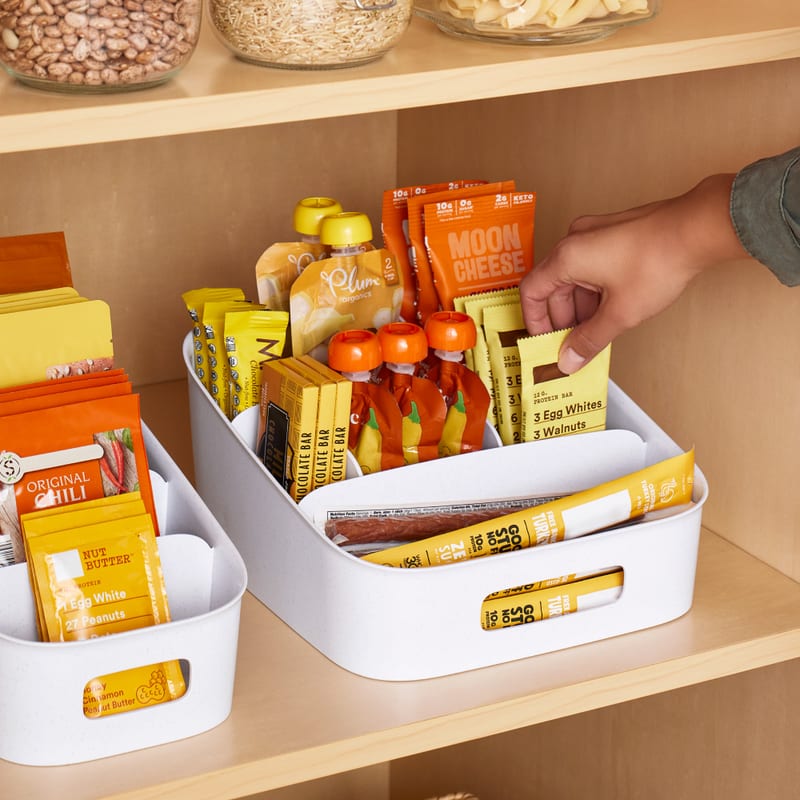
Snacks are a bigger, more mixed group than packets: bars, pouches and small bags in several sizes. For them, choose an organizer whose compartments you can change. The ShelfBin™ Snack Organizer has seven compartments, and its dividers adjust so you can size each one to fit snack bars, pouches or packets. Like the packet organizer, it has a stair-step design that raises the back row and a built-in handle for sliding it out, and there are no tools to set up: you load it and it is ready.
The fit: it measures 10.7 inches (27.2 cm) deep, 10.0 inches (25.4 cm) wide and 5.2 inches (13.2 cm) tall, in BPA-free recycled plastic in speckled white. It is the same depth and height as the packet organizer, so the two sit neatly side by side on one shelf about 11 inches (28 cm) deep, taking 16.5 inches (41.9 cm) of width together. Give the snack organizer the shelf at children’s eye level if they help themselves.
Step 6: Loose dry ingredients go in tall airtight containers
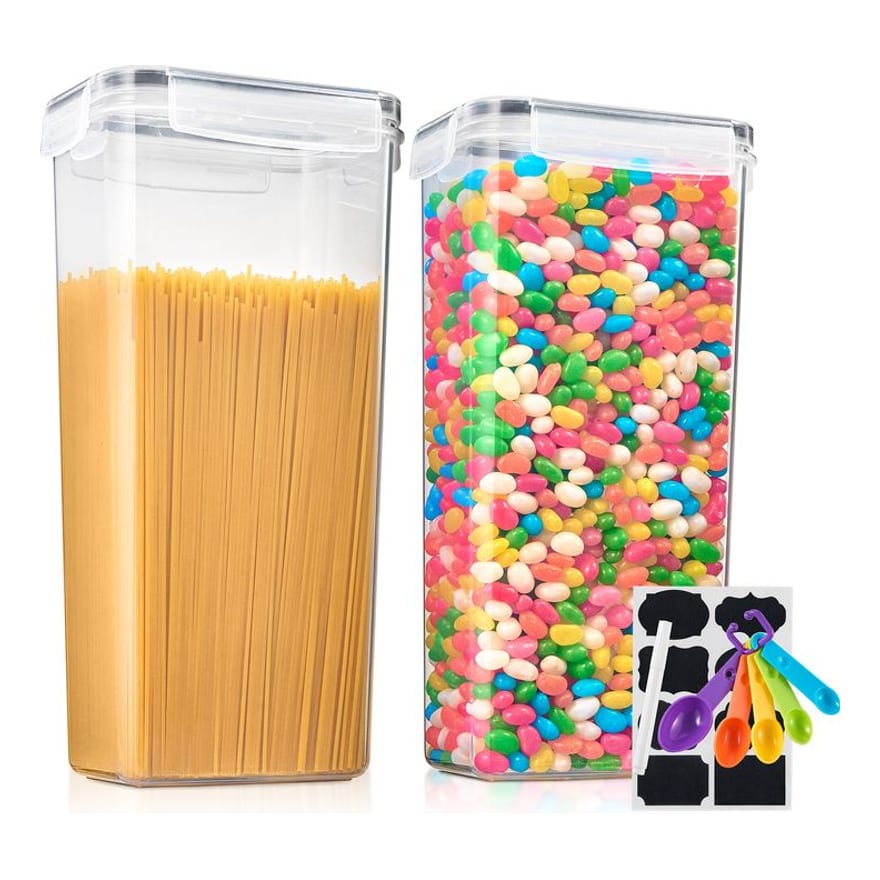
Cereal, flour, sugar, rice and beans come in bags that tear, roll over and take up more room than their contents. Decanting them into tall containers turns a wobbly pile into a neat row and uses the height of the shelf. The Airtight Tall Food Dispenser Containers (2 Pack) from Sorbus are two tall containers with airtight, leakproof lids to keep dry ingredients fresh, and a pouring spout for dispensing without a mess. The set comes with plain stickers and a white chalkboard marker for labeling, plus a measuring spoon. The maker describes them as refrigerator-safe, so one can move to the fridge if you like to keep nuts or coffee cold.
The fit: each container measures 5.6 inches (14.2 cm) long, 3.7 inches (9.4 cm) wide and 11.6 inches (29.5 cm) tall, and holds 2.6 liters (88.4 fl oz). They need a clear height of a little over 11.6 inches (29.5 cm), plus room to open the lid, so they belong on your tallest shelf or the pantry floor. Their slim shape is the point: the pair stands in about 7.4 inches (18.8 cm) of shelf width if you set them with the narrow side facing forward. Label each one with what is in it before you fill it.
Step 7: Bulky or odd-shaped extras go in open steel baskets
Spare bottles, boxed items and backup supplies don’t need dividers or lids. They need an open container that holds its shape and makes the whole group easy to pull forward.
A medium basket for a standard shelf
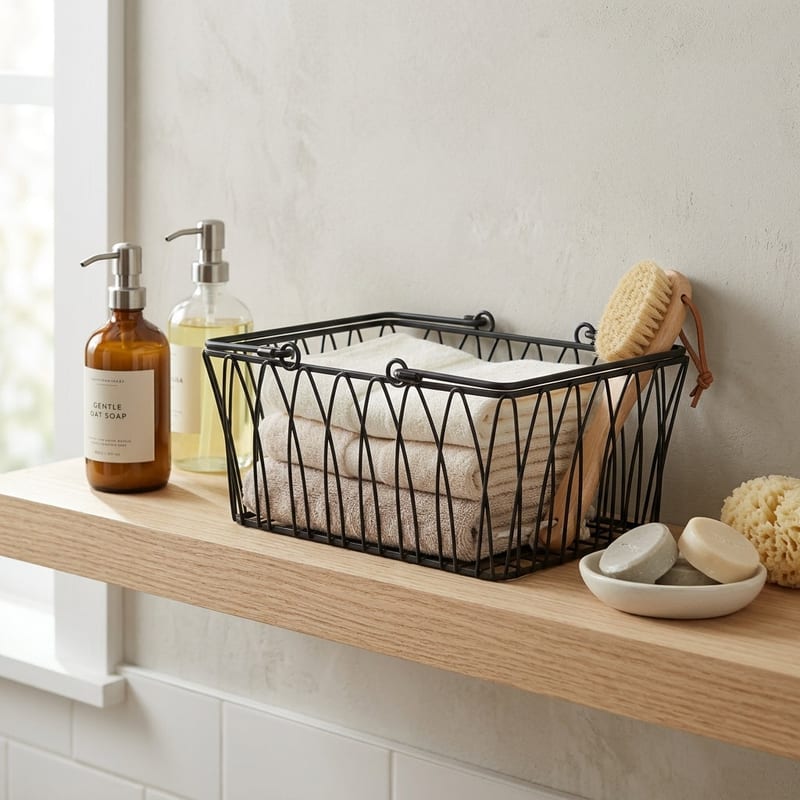
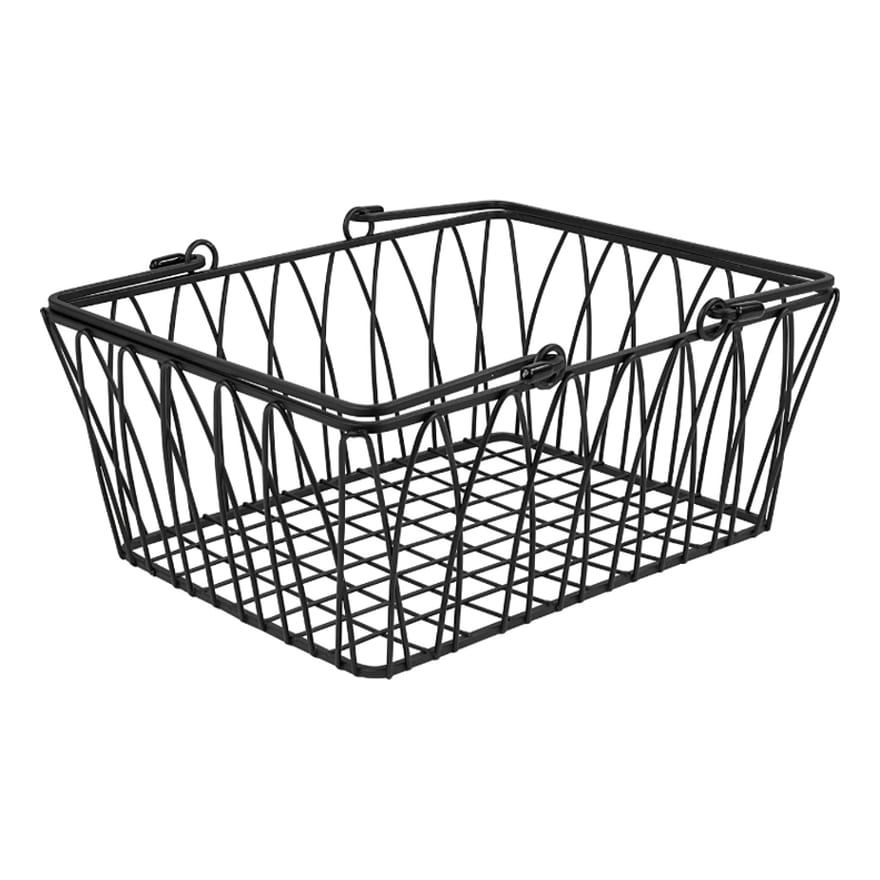
The Twist Storage Basket Medium from Spectrum is an open steel basket that the maker lists for pantry items, as well as bathroom and laundry supplies. It is built of steel that is meant to keep its shape and finish under regular weight. It measures 11 by 10 by 5.25 inches (27.9 by 25.4 by 13.3 cm). Set with its 10-inch (25.4 cm) side going back, it fits a shelf about 10 inches (25.4 cm) deep, or with the 11-inch (27.9 cm) side going back, a shelf 11 inches (28 cm) deep.
A larger basket for the floor or a deep bottom shelf
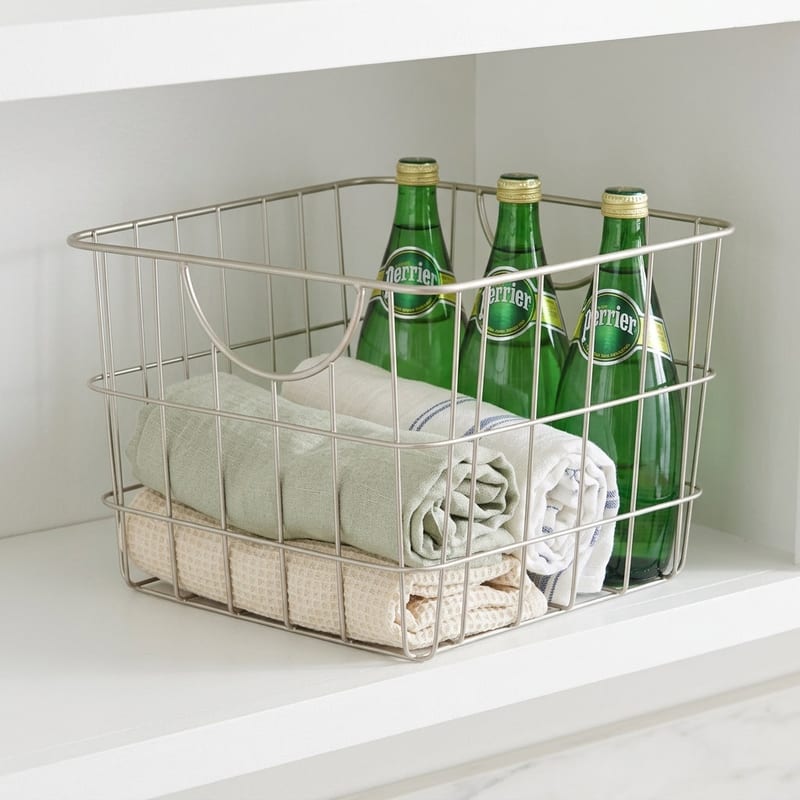
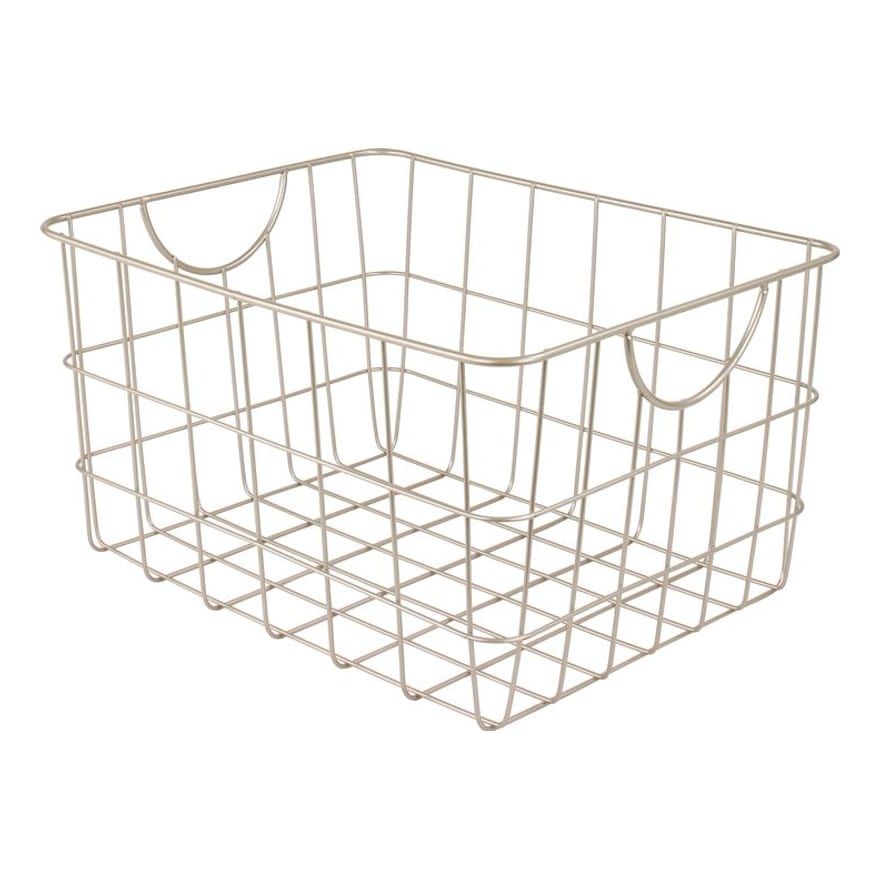
For a bigger group, such as backup supplies or bulk boxes, the Utility Storage Basket, also from Spectrum, is a larger open steel basket the maker lists for the same kinds of storage, pantry items included. It measures 15 by 11.75 by 8 inches (38.1 by 29.8 by 20.3 cm). With its shorter 11.75-inch (29.8 cm) side going back it needs a shelf at least 12 inches (30.5 cm) deep. If your pantry shelves are shallower, the floor is the better spot, where its size is an advantage.
Step 8: Put it back by category and label the shelf edge
Load each bin with its category, then return the bins in order of how often you reach for them: the things you use daily at waist to eye height, backup supplies down low, and the tall containers wherever the clear height allows. Label anything whose contents you can’t see from the front. A label on the bin front or the shelf edge saves you from pulling each one out. The Sorbus set comes with its own labels and marker; for the rest, any removable label works.
When you restock, put new items in the bin for their category, even if another bin has more room. A category system only stays tidy while every group stays in its own bin.
Choosing a bin shape by what you store
The shape of the container should follow the shape of the things in it:
- Things you grab often and loosely, like produce: open-front bins you can reach into, such as the ShelfBin stacking bins, at 10.0 inches (25.4 cm) deep and 12.3 inches (31.2 cm) tall stacked.
- Small, flat things: a narrow stair-step organizer, such as the ShelfBin packet organizer, with four compartments at 6.5 inches (16.5 cm) wide.
- Mixed snacks: a wider stair-step organizer with dividers you can move, such as the ShelfBin snack organizer, with seven compartments at 10.0 inches (25.4 cm) wide.
- Loose dry ingredients: tall, slim airtight containers, such as the Sorbus pair, at 11.6 inches (29.5 cm) tall and 2.6 liters (88.4 fl oz) each.
- Bulky extras on a standard shelf: an open steel basket such as the Spectrum Twist Medium, at 11 by 10 by 5.25 inches (27.9 by 25.4 by 13.3 cm).
- Bulky extras on the floor or a deep shelf: the larger Spectrum Utility basket, at 15 by 11.75 by 8 inches (38.1 by 29.8 by 20.3 cm).
Sort one shelf, measure it, and add bins only for the categories you found there. Check the current price at the retailer before you buy, and fix the next shelf once the first one works.